A ship that switches off its transponder disappears from the data you have. Satellite detection plus an AIS cross-check gives you a second look that does not depend on the ship's cooperation.

Recent Posts
A public feed with no export button and a rate limit. Walking it politely with rotating exits, collapsing 37 spellings of city names into one, and turning the result into map layers by city and by area plus category counts over time.
Four years of data on frontier AI releases and security. No breach wave followed each launch. Published flaws doubled in 2026, exploitation rose almost as fast, ransomware barely moved, and the PHP2Shell disclosure on 21 October showed how fast the gap between finding a flaw and using it can close.
Poll a source every 15 minutes, hash the path for a stable ID, keep the state in SQLite, archive what you find, say one thing in a chat channel. Six stages, no platform.

You have automated the act of looking, so you have automated the act of being seen. What a server actually learns from a monitor that runs for a year, and why the fix is usually to slow down rather than to hide better.
Six rules for putting a model anywhere near an investigation: assume it will be confidently wrong, keep every claim traceable to a fetched artifact, and treat a page you collected as something that might be talking to your model.
One stage out of 6, and a short list of jobs inside it. The test that sorts the narrowing work a model can take on from the verification and attribution work it can only draft — and why that draft is a lead, not a finding, until a person has checked it.
One small real problem, walked end to end: fetching, a stable ID, storage, notification, scheduling, and the failure mode that looks exactly like good news.
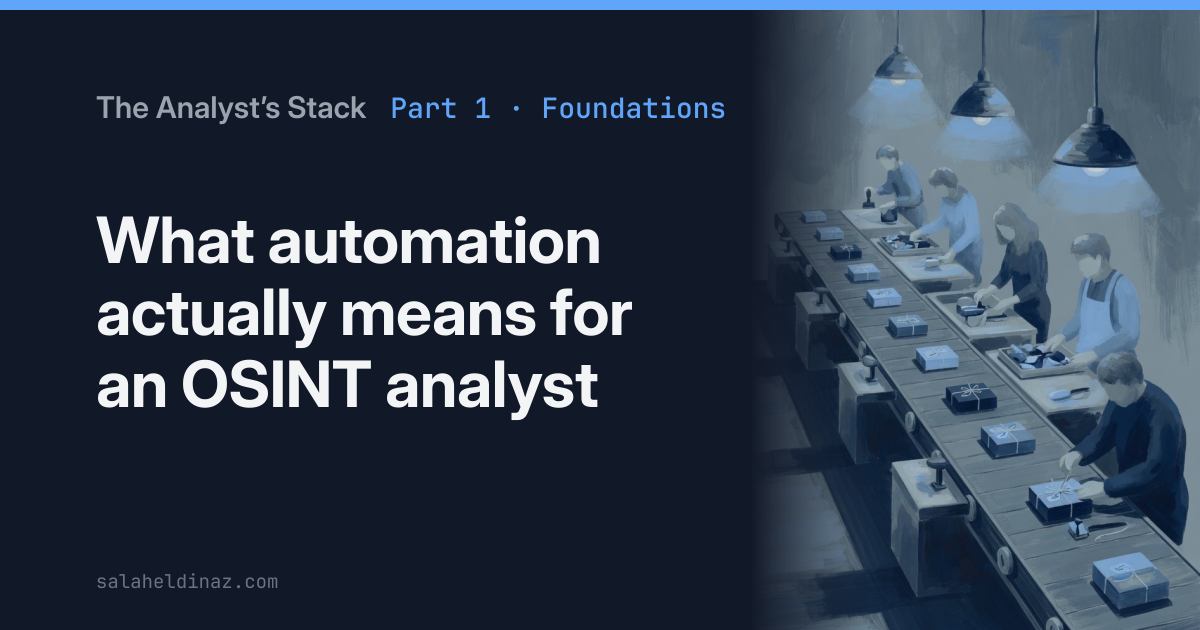
Not AI, not robots. Six stages that every collection system turns out to be a version of — and the 4 cases where the right answer is to do it by hand.
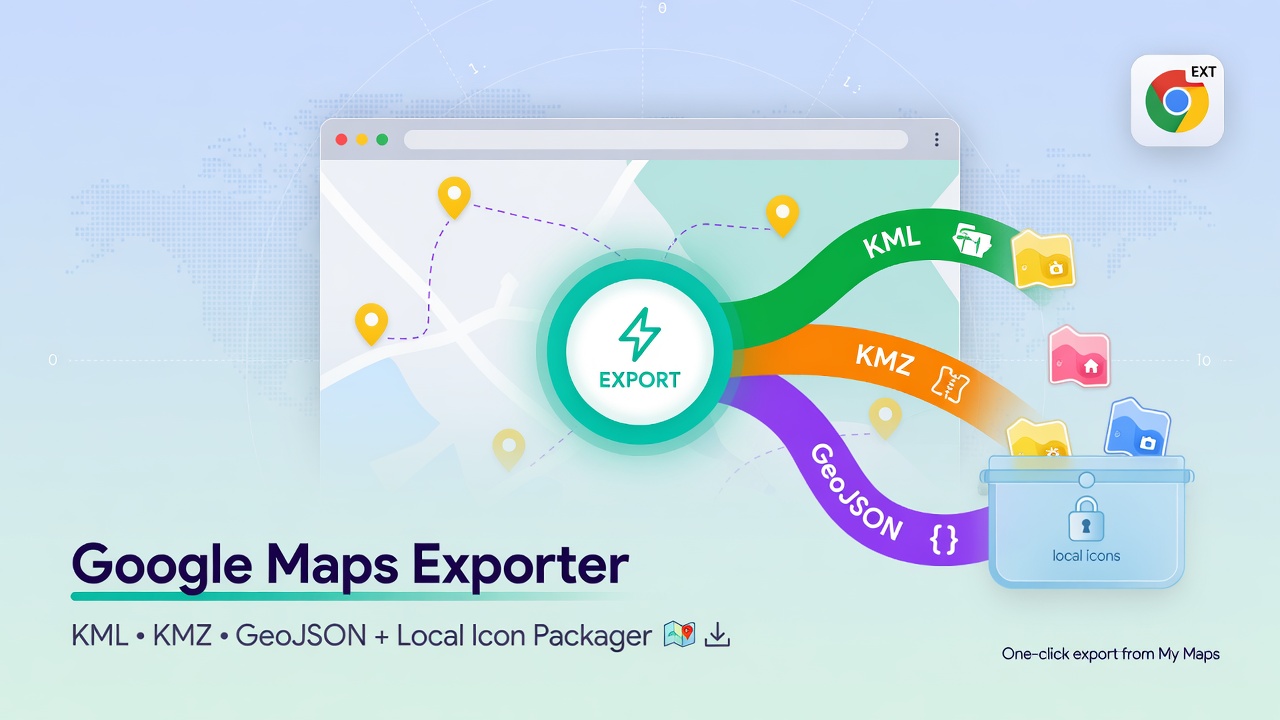
A Python CLI and Chrome extension that exports public Google Maps to KML, KMZ, and GeoJSON — preserving layers, placemarks, and marker icons.